- Home
- Tatta for Manufacturing
Set selling prices from your true production cost.
Save the standard composition of every product, issue raw materials against production orders, and record processing costs. Once production is finished, the actual unit cost is calculated right away as the basis for your margin.

Production cost questions that spreadsheets struggle to answer
- Challenge 1
Hard to know the unit cost, before or after production
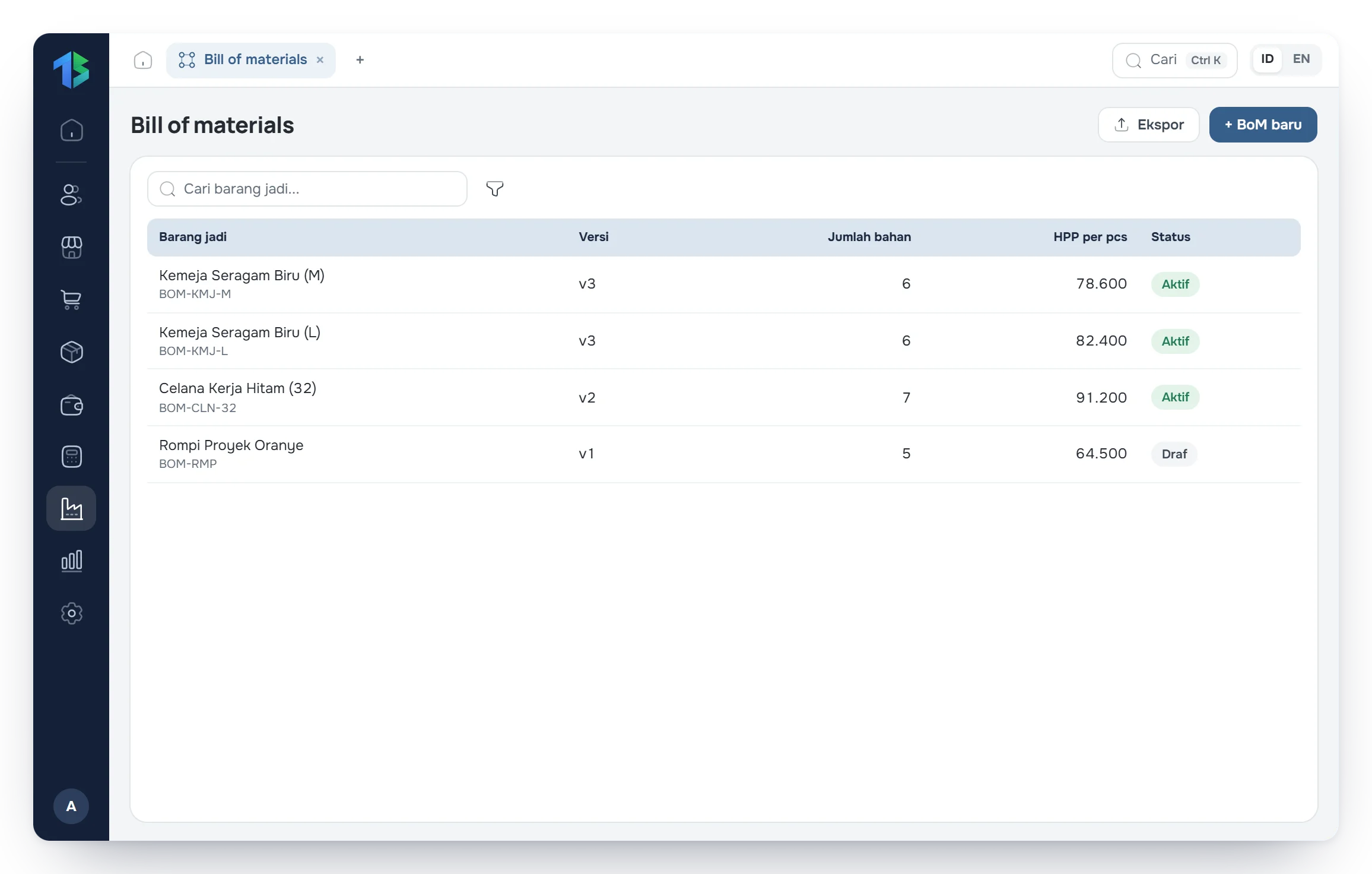
The bill of materials (BoM) gives an estimated material cost upfront, and the actual unit cost is calculated when the finished goods are completed.
- Challenge 2
Material shortages discovered once production has started
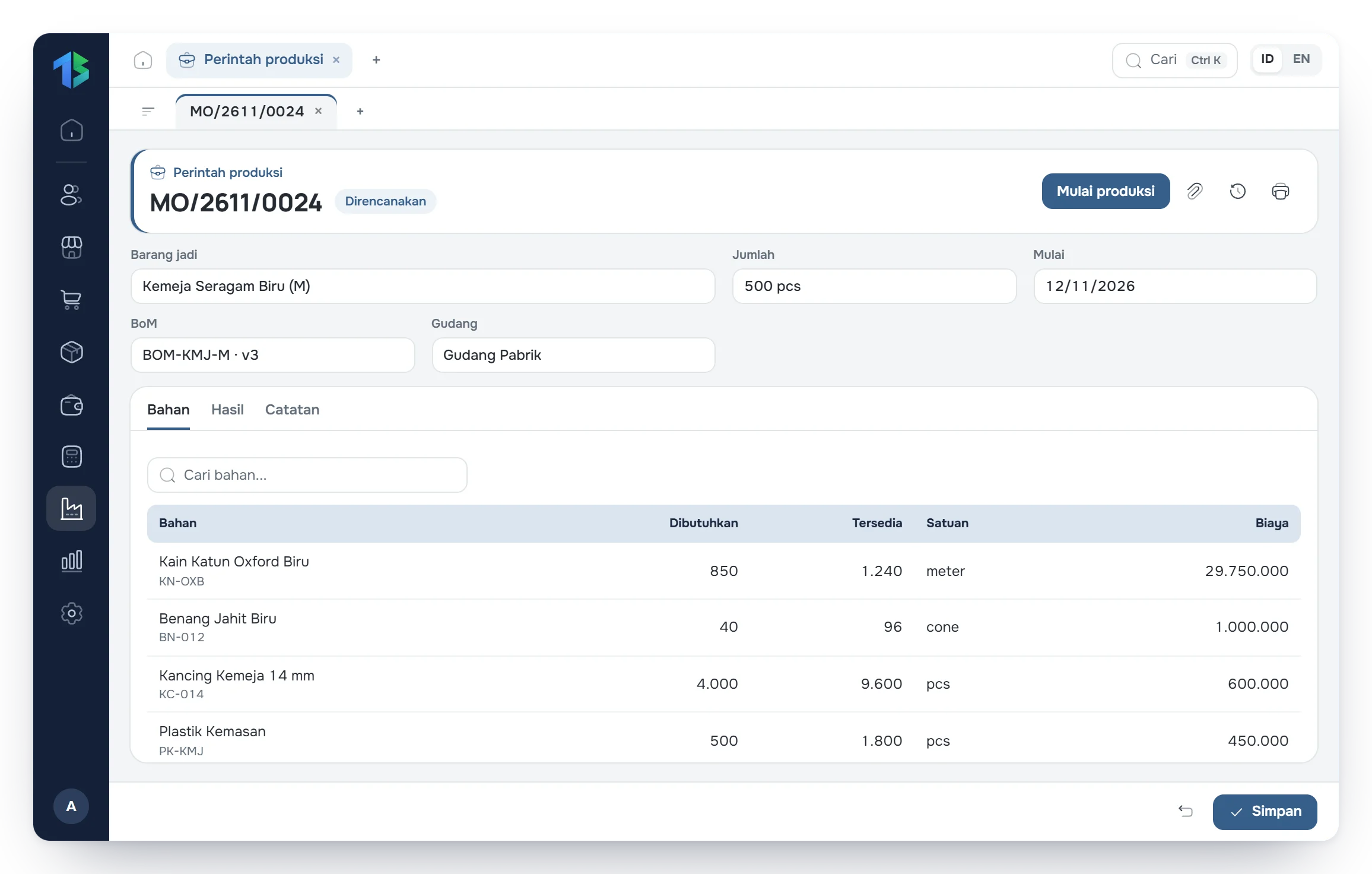
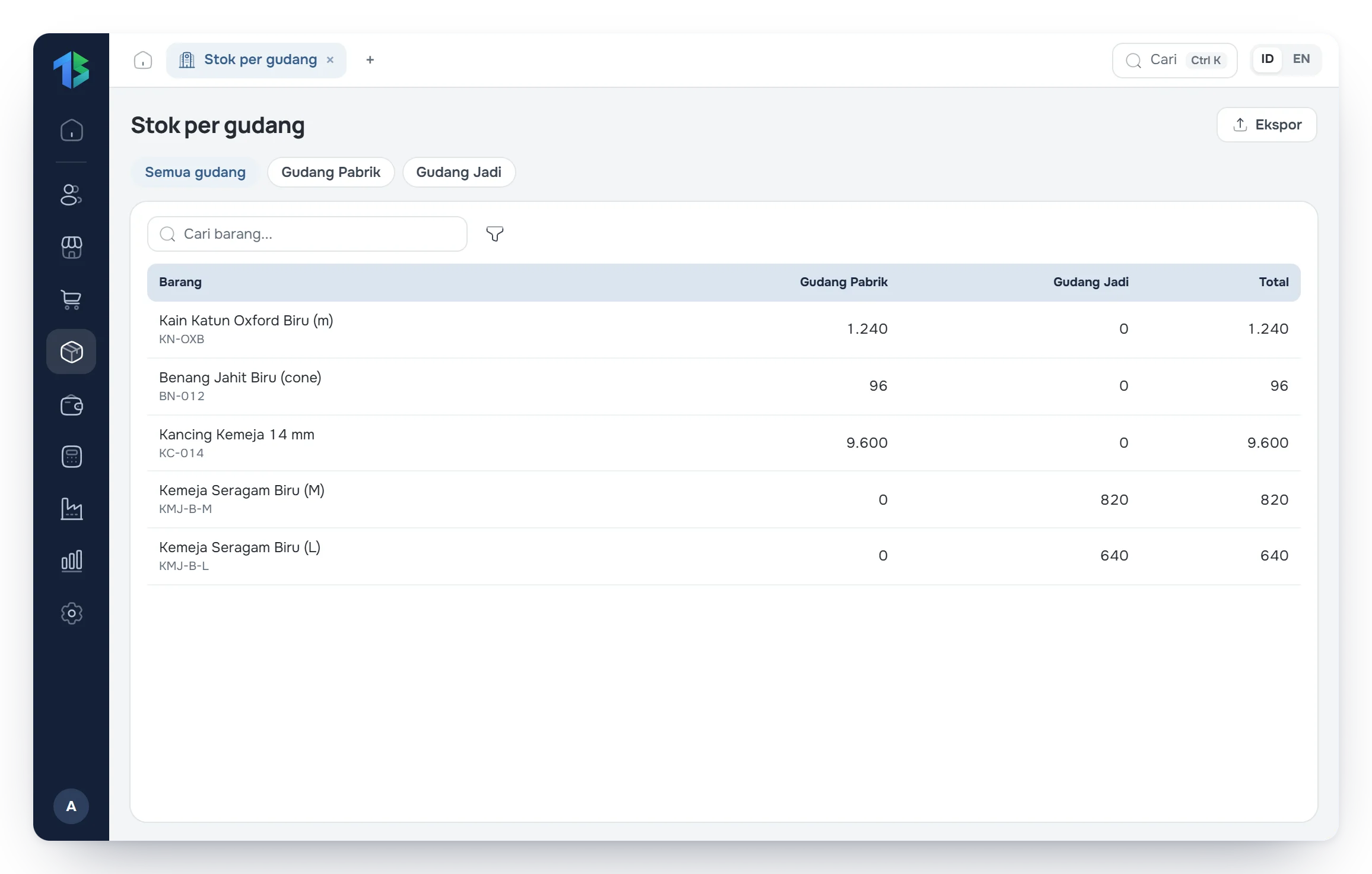
As soon as you enter the planned quantity, raw and supporting material needs are calculated, along with any shortfall against warehouse stock.
- Challenge 3
Material usage and finished goods do not match the books
Material issues, production costs, and finished goods receipts are recorded in one production order, and the journals are created automatically.
Tatta for manufacturing
Here is how Tatta solves it
The views below follow Tatta menus set up for this kind of business.
Know the estimated and actual unit cost.
Enter the quantity to produce to see the materials needed and the estimated cost per unit. While production runs, issued materials and processing costs add up into the value of the finished goods.
- Material needs calculated automatically from the formula
- Estimated cost per unit before production starts
- Actual material and overhead costs collected during production
Your workflow in Tatta
The routine for manufacturing, from recording data to reading the reports.
Step 1: Build a bill of materials (BoM) for each finished product.
Step 2: Create a production order and issue materials from the warehouse.
Step 3: Record labor and overhead costs during production.
Step 4: Complete production: finished goods go into the warehouse, damaged quantities are recorded separately.
FAQ
Frequently asked questions
Can't find your answer? Our team can help over chat, WhatsApp or email.